

Description
Steel Cable Mesh represents a revolutionary advancement in architectural safety and design, offering a unique combination of high tensile strength and complete structural flexibility. As a specialized stainless steel fabrication factory, we produce this premium wire rope mesh using high-grade materials and precision weaving techniques to meet the rigorous demands of modern infrastructure and aesthetic projects.
What is Flexible Stainless Steel Cable Mesh?
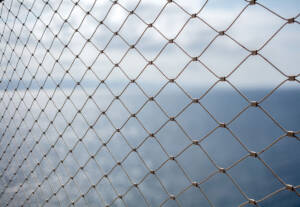
Flexible stainless steel cable mesh is a resilient, hand-woven or ferruled fabric made from high-quality stainless steel wire ropes (typically AISI 304 or 316). Unlike traditional rigid fencing, our factory-manufactured cable mesh possesses “skin-like” properties, allowing it to stretch and contour around complex architectural shapes without losing structural integrity. This material is virtually indestructible, resistant to extreme weather, and provides a transparent, lightweight aesthetic that does not obstruct views or airflow.
Specifications & Options
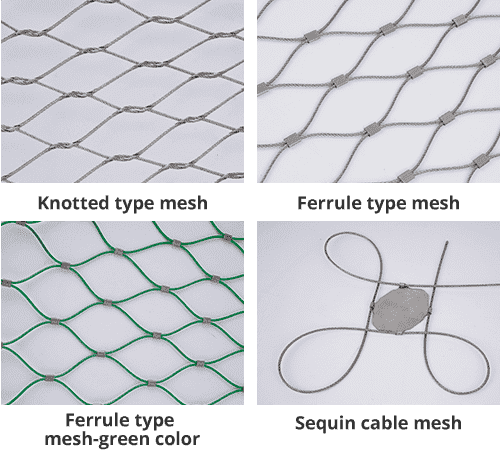
To ensure the perfect fit for your project, our integrated production lines offer a wide range of customizable parameters:
Material Grades: Standard AISI 304 for general use or AISI 316/316L for marine-grade corrosion resistance.
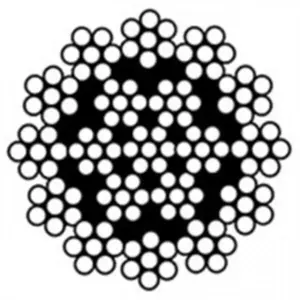
Cable Structures: Standard 7×7 or 7×19 rope constructions for the optimal balance of flexibility and breaking load.
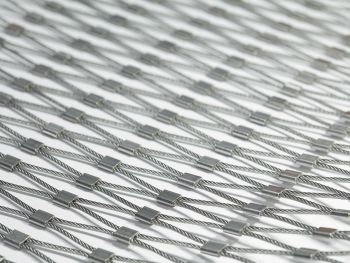
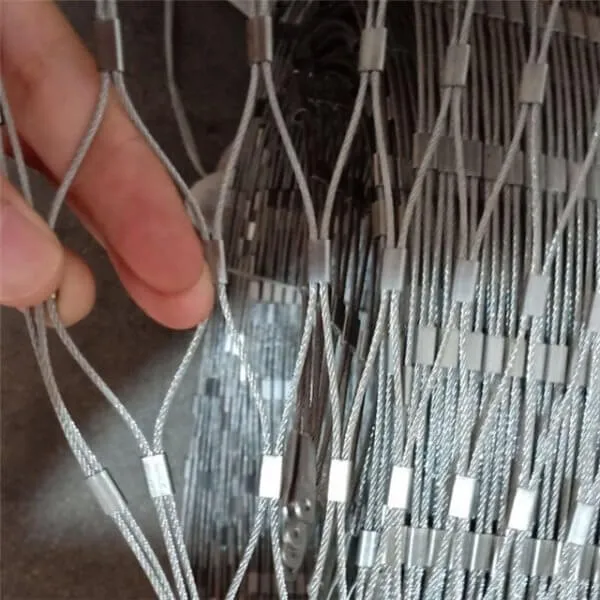
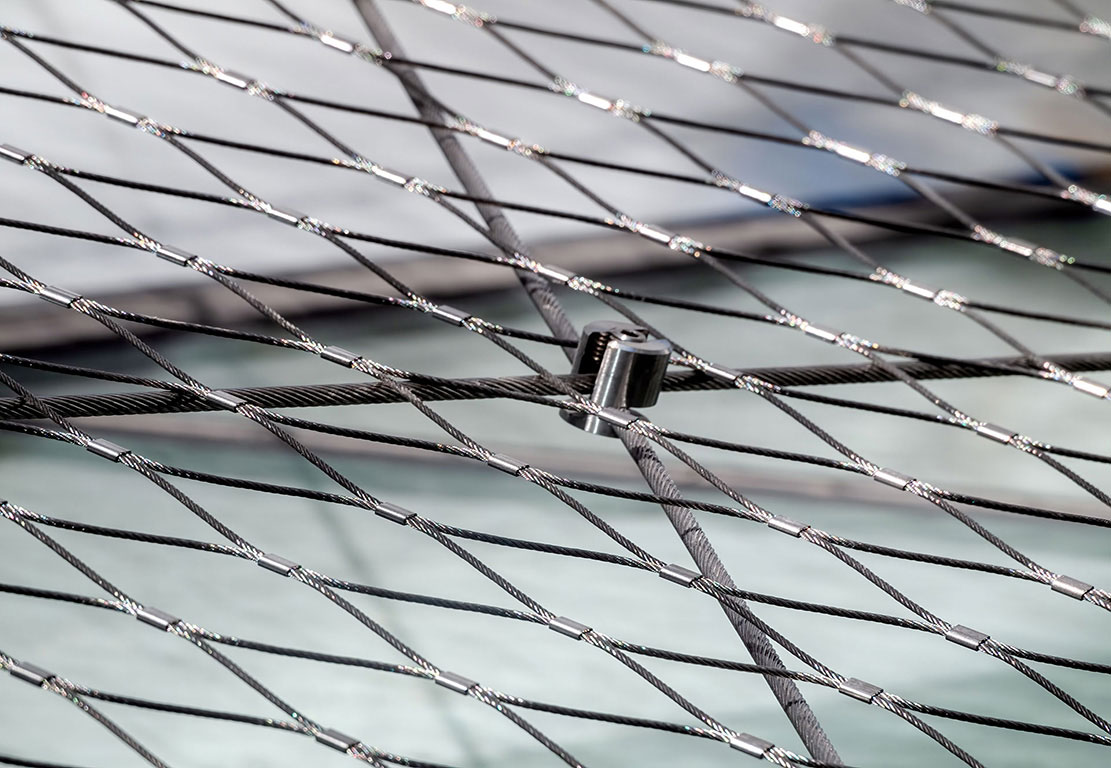
Mesh Types: Available in Interwoven (hand-knotted) for a classic look or Ferrule Type for a sleek, modern industrial aesthetic.
Aperture Sizes: Customizable diamond openings ranging from 20mm to 200mm+ to suit specific safety or containment needs.

Material | stainless steel 304, 304L, 316, 316L |
Surface treatment | primary color or black oxide finish |
Cable diameter | 1.0-5.0 mm |
Mesh opening sizes | 25-200 mm |
Mesh opening angles | 20°, 30°, 60°, 70°, 75°. Mesh aperture at 60° as standard opening. |
Construction of wire cable | 7 × 7, 7 × 19 |
Connection | ferruled or knotted |
Ordering | specific to order, according to the project. |
Knotted Type Cable Mesh Specification | ||||||
Code | Rope Construction | Rope Diameter | Opening Size | Breaking Force | ||
|---|---|---|---|---|---|---|
Inch | mm | Inch | mm | KN | ||
WY-01 | 7 × 19 | 1/8 | 3.2 | 4.7″ × 4.7″ | 120 × 120 | 7.38 |
WY-02 | 7 × 19 | 1/8 | 3.2 | 4″ × 4″ | 102 × 102 | 7.38 |
WY-03 | 7 × 19 | 1/8 | 3.2 | 3.6″ × 3.6″ | 90 × 90 | 7.38 |
WY-04 | 7 × 19 | 1/8 | 3.2 | 3″ × 3″ | 76 × 76 | 7.38 |
WY-05 | 7 × 19 | 1/8 | 3.2 | 2″ × 2″ | 51 × 51 | 7.38 |
WY-06 | 7 × 7 | 3/32 | 2.4 | 4″ × 4″ | 102 × 102 | 4.18 |
WY-07 | 7 × 7 | 3/32 | 2.4 | 3.6″ × 3.6″ | 90 × 90 | 4.18 |
WY-08 | 7 × 7 | 3/32 | 2.4 | 3″ × 3″ | 76 × 76 | 4.18 |
WY-09 | 7 × 7 | 3/32 | 2.4 | 2.4″ × 2.4″ | 60 × 60 | 4.18 |
WY-10 | 7 × 7 | 3/32 | 2.4 | 2″ × 2″ | 51 × 51 | 4.18 |
WY-11 | 7 × 7 | 5/64 | 2 | 3″ × 3″ | 76 × 76 | 3.17 |
WY-12 | 7 × 7 | 5/64 | 2 | 2.4″ × 2.4″ | 60 × 60 | 3.17 |
WY-13 | 7 × 7 | 5/64 | 2 | 2″ × 2″ | 51 × 51 | 3.17 |
WY-14 | 7 × 7 | 5/64 | 2 | 1.5″ × 1.5″ | 38 × 38 | 3.17 |
WY-15 | 7 × 7 | 1/16 | 1.6 | 3″ × 3″ | 76 × 76 | 2.17 |
WY-16 | 7 × 7 | 1/16 | 1.6 | 2″ × 2″ | 51 × 51 | 2.17 |
WY-17 | 7 × 7 | 1/16 | 1.6 | 1.5″ × 1.5″ | 38 × 38 | 2.17 |
Ferruled Type Cable Mesh Specification | |||||
Code | Rope Construction | Rope Diameter | Aperture | Breaking Force | |
|---|---|---|---|---|---|
Inch | mm | mm | kN | ||
WY-01 | 7 × 19 | 1/8 | 3.2 | 120 × 208 | 7.38 |
WY-02 | 7 × 19 | 1/8 | 3.2 | 100 × 173 | 7.38 |
WY-03 | 7 × 19 | 1/8 | 3.2 | 90 × 156 | 7.38 |
WY-04 | 7 × 7 | 3/32 | 2.4 | 100 × 173 | 4.18 |
WY-05 | 7 × 7 | 3/32 | 2.4 | 90 × 156 | 4.18 |
WY-06 | 7 × 7 | 3/32 | 2.4 | 80 × 139 | 4.18 |
WY-07 | 7 × 7 | 3/32 | 2.4 | 70 × 121 | 4.18 |
WY-08 | 7 × 7 | 5/64 | 2 | 100 × 173 | 3.17 |
WY-09 | 7 × 7 | 5/64 | 2 | 90 × 156 | 3.17 |
WY-10 | 7 × 7 | 5/64 | 2 | 80 × 139 | 3.17 |
WY-11 | 7 × 7 | 5/64 | 2 | 70 × 121 | 3.17 |
WY-12 | 7 × 7 | 1/16 | 1.6 | 80 × 139 | 2.17 |
WY-13 | 7 × 7 | 1/16 | 1.6 | 70 × 121 | 2.17 |
WY-14 | 7 × 7 | 1/16 | 1.6 | 60 × 104 | 2.17 |
WY-15 | 7 × 7 | 1/16 | 1.6 | 51 × 87 | 2.17 |
WY-16 | 7 × 7 | 3/64 | 1.2 | 80 × 139 | 1.22 |
WY-17 | 7 × 7 | 3/64 | 1.2 | 60 × 104 | 1.22 |
Applications Of Steel Cable Mesh
Facade
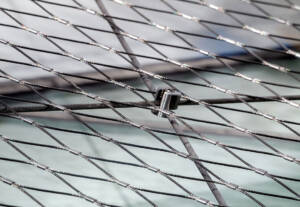
Our cable mesh serves as a dynamic “breathable” skin for buildings. It provides solar shading and aesthetic enhancement while maintaining natural ventilation and visibility for occupants.
Railing
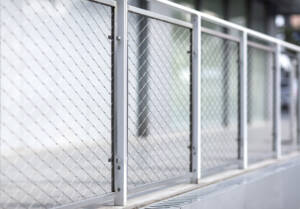
Incorporate our mesh into staircases and balcony balustrades. It offers a minimalist, high-safety infill that meets building codes without the weight or maintenance of glass panels.
Fall Protection
As a safety-focused manufacturer, we design high-strength mesh for bridges, helipads, and observation decks to provide discrete yet infallible protection against accidental falls.
Perimeter Fence
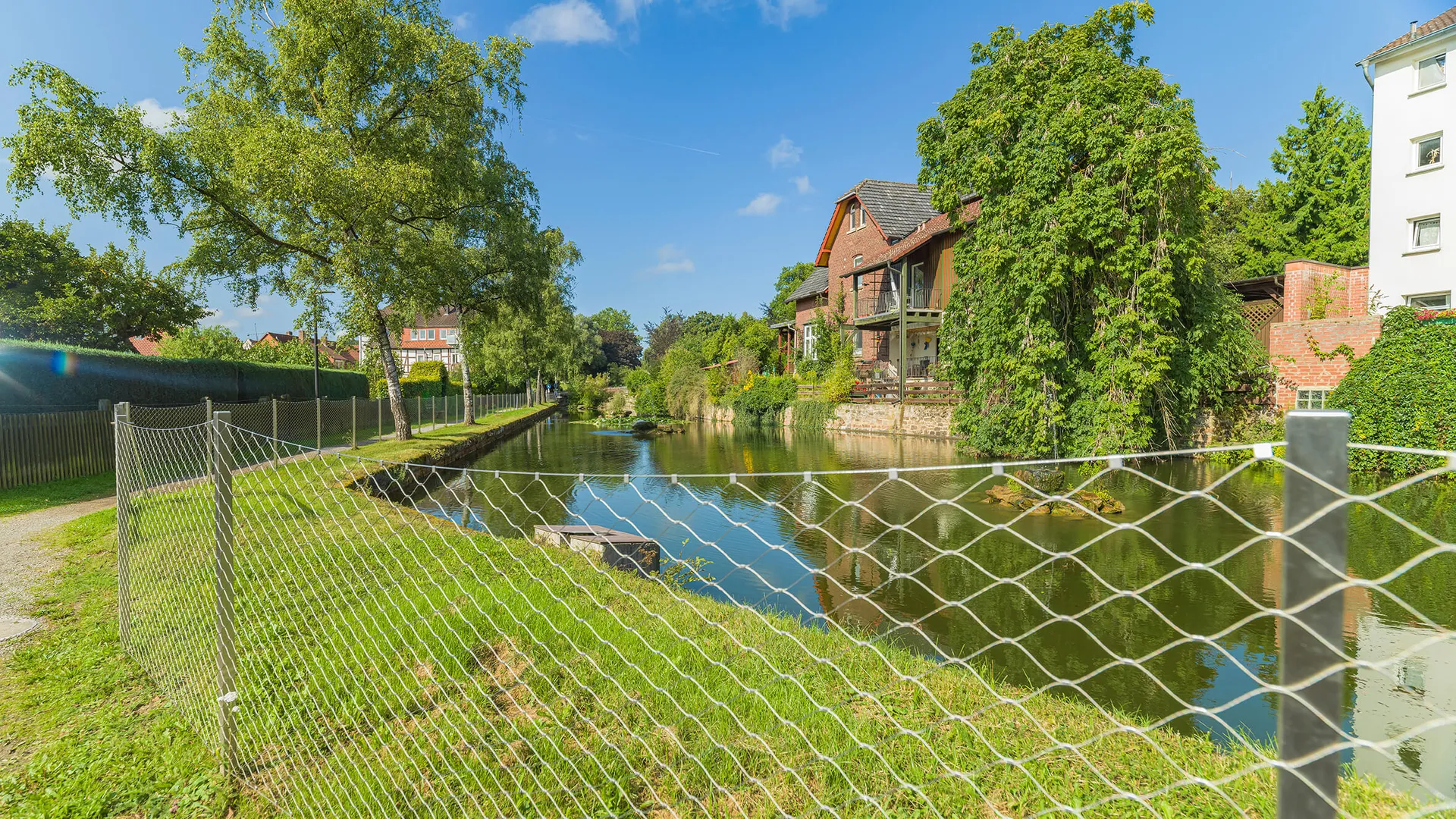
Steel cable mesh creates high-security perimeters that are nearly impossible to climb or cut, making it ideal for residential villas and sensitive commercial sites.
Greenery
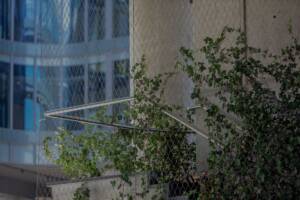
The mesh acts as a perfect trellis system for “Vertical Forests.” It supports the weight of climbing plants, allowing for the creation of lush, living green walls on any building exterior.
Zoo Facilities
Commonly known as “Zoo Mesh,” our product is the industry standard for animal enclosures. It provides a soft-touch, safe environment for animals while offering visitors an unobstructed, cage-free viewing experience.
Steel Cable Mesh | Made In China | Supply to Worldwide
Sourcing your Steel Cable Mesh directly from our factory in China ensures you receive the highest international quality at competitive wholesale pricing. We manage the entire lifecycle from raw wire inspection to final tension testing.
Custom Fabrication: We manufacture panels to your exact dimensions, reducing on-site waste and installation time.
Quality Certification: All products undergo strict QC to ensure compliance with global tensile strength and safety standards.
Seamless Logistics: We provide expert export services, delivering bulk or custom orders to construction sites and distributors worldwide with full technical support.
Professional Installation Tips for Steel Cable Mesh
Installing flexible cable mesh requires precision and the right sequence to ensure both structural safety and aesthetic tension. As an experienced manufacturer, we recommend following these professional guidelines to achieve a flawless, “drum-tight” finish.
1. Frame Preparation and Alignment
Before unrolling the mesh, ensure your supporting structure (tubular frames or perimeter cables) is securely anchored. The frame must be strong enough to withstand the significant tension loads applied once the mesh is stretched.
Pro Tip: Verify that all internal dimensions of the frame match the shop drawings provided by our factory technical team.
2. Identifying Mesh Orientation
Stainless steel cable mesh has a specific “diamond” direction.
Standard Stretch: Most mesh is designed to be stretched horizontally.
Visual Check: Ensure the mesh is oriented so the diamonds open correctly. Forcing the mesh to stretch in the wrong direction can distort the wires and weaken the structure.
3. Temporary Positioning (Tacking)
Lay the mesh against the frame and use temporary fasteners—such as plastic cable ties or spring clamps—to hold it in place.
Top-Down Approach: Start by securing the top corners, then the center, and work your way toward the bottom. This allows the mesh to hang naturally before final tensioning.
4. Lacing and Tensioning
The final attachment is typically done using a lacing wire or specialized stainless steel clips.
The Spiral Method: Thread the lacing wire through the mesh edge and wrap it around the frame pipe.
Uniform Tension: Pull the lacing wire tight incrementally. Do not over-tension one side immediately; instead, work around the perimeter gradually to ensure even distribution of the load across all diamonds.
5. Tool Selection
Using the right tools is critical for a professional result. Our factory recommendation includes:
Wire Rope Cutters: For clean trims without fraying.
Pneumatic or Manual Crimpers: If using ferrule-type connections.
Tensioning Winch/Pliers: To pull the lacing wire to the required Newton meters of tension.
6. Final Inspection
Once installed, the mesh should be firm to the touch with no sagging areas. Check all lacing wire knots or ferrules to ensure they are crimped or tied off securely.
Technical Support from Our Factory
When you source from us, we don’t just ship a product—we provide a solution. We offer customized installation drawings and can supply all necessary stainless steel hardware (eyelets, lacing wires, and tensioners) to match your specific mesh grade.
Reviews
There are no reviews yet.