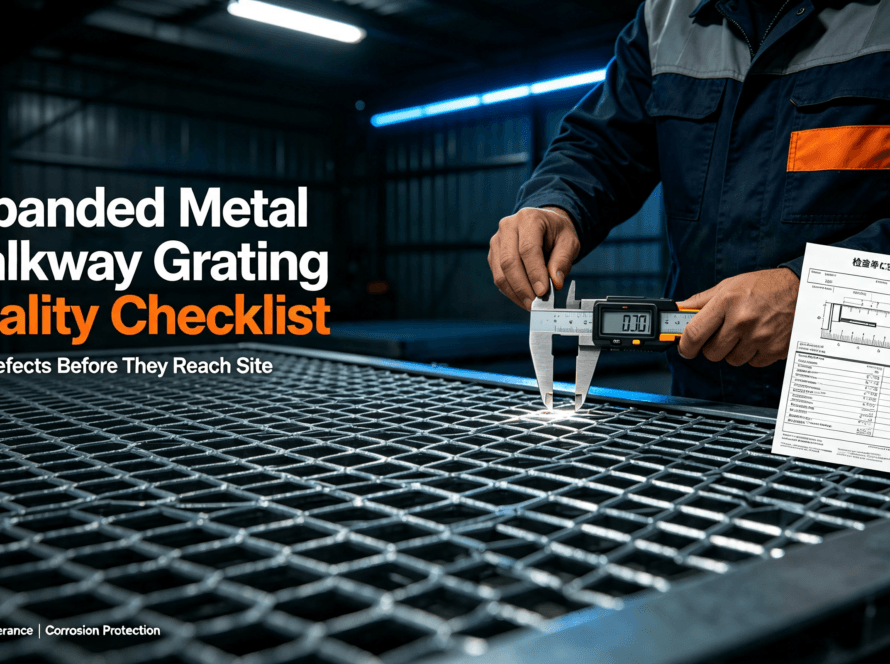
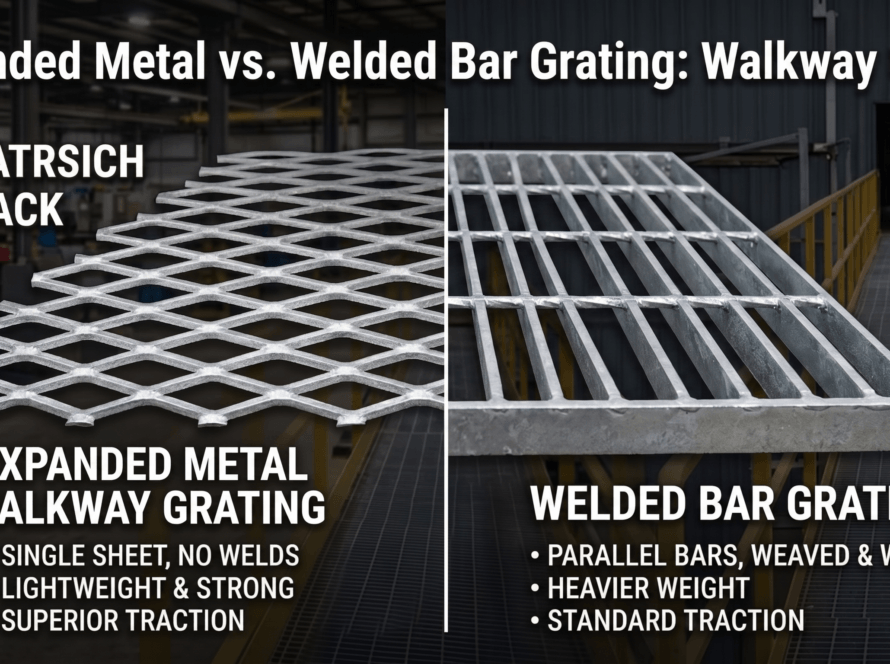
Selecting the right metal alloy for your Expanded Metal walkway grating determines long-term performance and upfront project costs. Each material offers unique advantages based on moisture levels, chemical exposure, and weight limits.
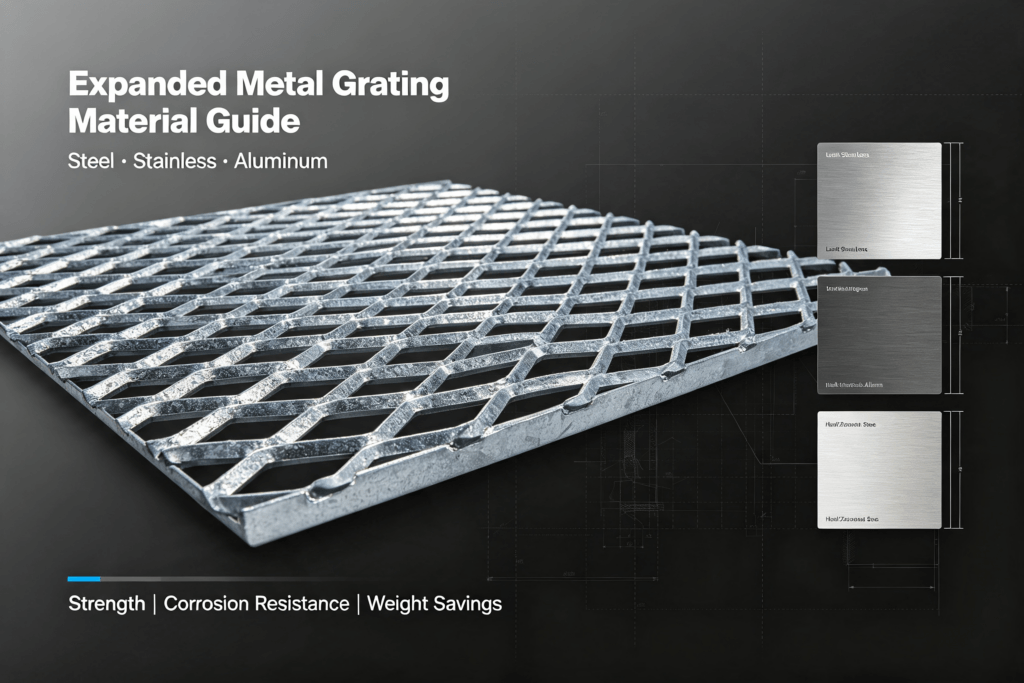
1. Hot-Dip Galvanized Carbon Steel Expanded Metal Grating: High Strength, Low Cost
Carbon steel provides maximum load capacity at a competitive price. However, untreated raw steel rusts quickly outdoors.
To solve this, factories apply a hot-dip galvanized (HDG) coating after expanding the sheet. The zinc layer coats every diamond strand, creating a robust shield against corrosion. Most industrial plants choose galvanized Genişletilmiş Metal Geçit Izgarası for cost-effective outdoor durability.
2. Stainless Steel (304 / 316) Expanded Metal Grating: Maximum Corrosion Protection
For marine environments, offshore rigs, and chemical plants, standard zinc coatings may fail under intense exposure.
- Grade 304: Offers reliable rust resistance for indoor chemical areas and washdown bays.
- Grade 316: Contains molybdenum, which resists harsh saltwater pitting and severe acid exposure.
Installing stainless steel Genişletilmiş Metal Geçit Izgarası prevents rust contamination and reduces costly downtime in aggressive environments.
3. Aluminum (5052 / 6061) Grating: Lightweight and Weather-Proof
When structural weight limits restrict your design, aluminum offers the ideal solution. Aluminum weighs roughly one-third as much as carbon steel while naturally resisting weather damage.
Architects and contractors routinely specify aluminum Genişletilmiş Metal Geçit Izgarası for rooftop walkways, decorative catwalks, and suspended access platforms.
Alloy Quick Guide
- General Industrial Plants: Choose Galvanized Carbon Steel.
- Offshore & Chemical Facilities: Choose Grade 316 Stainless Steel.
- Rooftop & Weight-Sensitive Structures: Choose Aluminum.