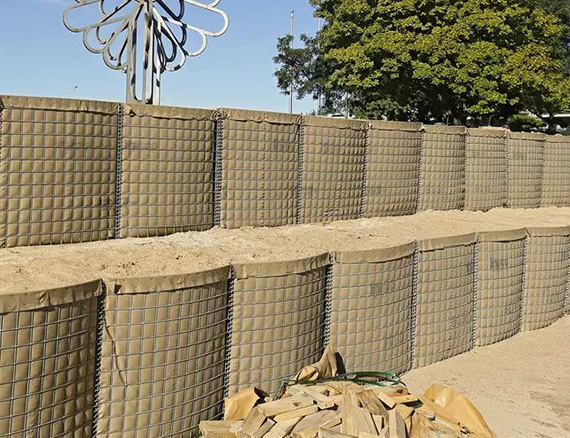
Temporary fence collapse is one of the most common—and preventable—hazards on modern construction sites. While a temporary fence panel is designed to withstand normal ambient forces, the addition of printed privacy banners, shade cloth, or debris netting drastically increases wind resistance, transforming a simple barrier into a giant sail.
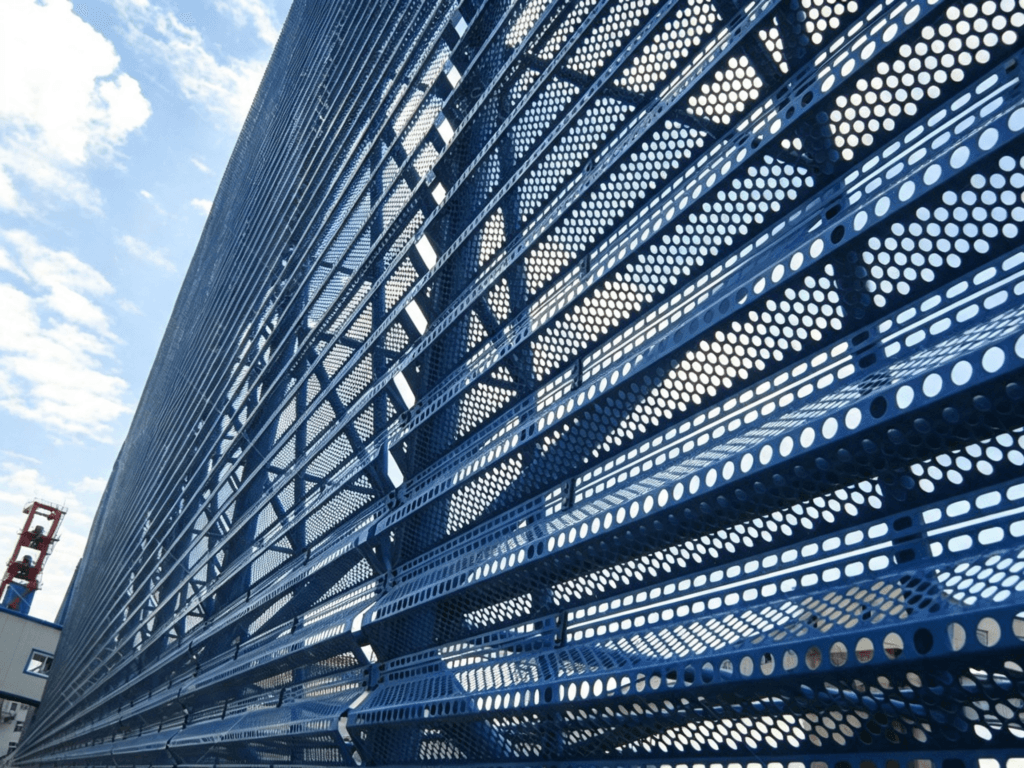
The Mechanics of Wind Force on Temporary Fencing
When wind strikes a solid or semi-solid surface, kinetic energy transforms into lateral force (drag pressure). According to structural design principles outlined by the ASCE 7 Minimum Design Loads Standard, wind pressure (P) increases exponentially with wind velocity (V):
P = 0.00256 * V2
When contractors attach 100% block-out privacy screens to standard perimeter panels, wind load increases by up to 300–400%. Without adequate ballast or structural bracing, even moderate gusts (30–40 mph) can easily overturn an unanchored fence line, causing severe property damage or bodily injury to pedestrians.
Calculating Ballast and Support Requirements
To prevent overturning, the stabilizing moment (created by base weights and bracing) must exceed the overturning moment (created by wind pressure acting at the height center of the panel).
   [ Wind Pressure (P) ]  --->   +------------------------+
                                 |  Privacy Shade Cloth   |  (Height: H)
                                 |   Fencing Mesh Panel   |
                                 +------------------------+
                                            ||
                                     [ Stabilizer Strut ]
                                            ||
                                    [ Concrete Ballast Block ]
To maintain structural integrity during extreme weather events:
- Use Stabilizer Bracing: Install diagonal support struts at every 3rd or 4th panel junction. High-wind zones require continuous bracing using heavy-duty temporary fence stay couplers and bracing.
- Select Permeable Fabrics: Choose privacy screens with 70–80% shade cloth rating rather than 100% solid vinyl to allow airflow while retaining visual screening.
- Upgrade Panel Construction: Industrial-grade site enclosures require rigid frame construction. High-density welded wire mesh temporary fencing offers superior structural frame rigidity compared to loose chain link mesh.
- Anchor Base Feet: Utilize high-mass footings. Standard light plastic bases should be replaced with steel-reinforced concrete feet or heavy hot-dipped galvanized fence bases.
Industry Safety Standards & Inspection Checklist
Guidelines from the HSE Guidance on Site Perimeter Security stress that site managers must conduct daily perimeter checks, particularly before and after adverse weather conditions.
Before attaching custom branding or privacy shade rolls to your powder-coated site fencing, verify that your installation includes adequate back-bracing and ballast to keep the site safe, compliant, and structurally sound.