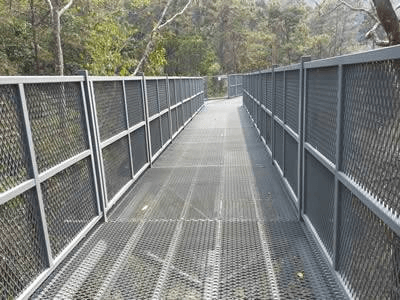
Selecting the optimal protective mesh for commercial heating, ventilation, and air conditioning (HVAC) systems directly impacts filtration efficiency, energy consumption, and structural longevity. When designing primary air intake louvers, pre-filter guards, or internal duct screens, engineers and procurement teams inevitably face a core specification choice: perforated metal or woven wire mesh?
While both media effectively restrict particulate debris and safeguard sensitive downstream HEPA filters, their mechanical behavior regarding airflow resistance, structural rigidity, and pressure drop differs significantly.
Direct Answer: Which Mesh Type Fits Your HVAC Application?
Quick Summary: Use perforated metal when high structural rigidity, impact resistance, and flat surface mounting are required (e.g., external intake louvers and heavy-duty pre-filter frames). Use woven wire mesh when maximizing open area percentage, reducing system static pressure drop, and capturing fine particulates are the main priorities (e.g., internal air handler units and high-efficiency pre-filters).
Perforated Metal vs. Woven Wire Mesh: Engineering Comparison
To satisfy modern building codes and energy efficiency benchmarks set by the ASHRAE Standard 52.2 for Air Cleaning Devices, HVAC designers must balance particulate capture against system drag.
| Performance Metric | Perforated Metal Sheets | Woven Wire Mesh | Primary Operational Impact |
| Max Open Area % | 30% – 58% | 50% – 85% | Higher open area reduces fan energy load |
| Structural Rigidity | High (Self-supporting) | Moderate to Flexible | Perforated requires less frame support |
| Pressure Drop (Δ P) | Moderate to High | Low to Moderate | Lower pressure drop lowers electricity costs |
| Cleanability & Reusability | Exceptional (Smooth surface) | Good (May trap fibers in wire intersections) | Impacts maintenance and replacement cycles |
| Impact Resistance | Extreme | Moderate | Protects coils from large airborne debris |
Calculating Open Area Percentage for Airflow Efficiency
Maintaining adequate airflow velocity requires precise open area calculations. Excess static pressure forces HVAC blowers to consume more power, accelerating equipment wear.
According to fluid dynamics standards outlined in the SMACNA HVAC Duct Construction Standards, the open area percentage for a square-weave woven mesh is calculated using the mesh opening (D) and wire diameter (W):
Open Area % = ( \frac{D}{D + W} )^2 * 100
For standard HVAC duct protection against birds, rodents, and large debris, specifying an open area between 60% and 75% provides an optimal compromise between physical protection and minimal airflow resistance.
       WOVEN WIRE MESH              PERFORATED METAL
   +---+   +---+   +---+         +---+   +---+   +---+
   |   |   |   |   |   |         | ( )   ( )   ( )   |
   +---+   +---+   +---+         |                   |
   |   |   |   |   |   |         | ( )   ( )   ( )   |
   +---+   +---+   +---+         +---+   +---+   +---+
  [ High Open Area % ]          [ High Structural Rigidity ]
  [ Low Pressure Drop ]         [ Superior Impact Resistance ]
Key Application Scenarios in Modern HVAC Architecture
1. External Air Intake & Duct Protection
Air intakes on rooftop units (RTUs) require heavy-duty barriers to withstand outdoor weather conditions, wind-driven rain, and debris. Specifying corrosion-resistant perforated metal duct guards ensures long-term structural integrity without sagging over large span openings.
2. Industrial Pre-Filter Protection
In high-dust industrial environments, raw outdoor air quickly degrades delicate pleated media. Installing rigid stainless steel pre-filter mesh upstream of secondary filters catches coarse dust and lint, extending the service life of costly high-efficiency filters by up to 200%.
3. Moisture Eliminator & Demister Screens
HVAC cooling coils generate significant condensation. Utilizing fine-weave woven wire mesh filter screens made from Marine-Grade 316 Stainless Steel prevents moisture droplet carryover into downstream ductwork, mitigating mold growth and corrosion risk.
Material Selection: Galvanized vs. Stainless Steel
Material choice determines the life-cycle cost of HVAC filtration components, particularly in demanding environments:
- Hot-Dipped Galvanized Steel: Cost-effective for standard commercial indoor air handlers. Specifying certified galvanized steel filter mesh offers reliable rust protection in non-condensing environments.
- 304 Stainless Steel: The industry standard for commercial kitchens, hospitals, and general outdoor intake louvers.
- 316L Stainless Steel: Essential for coastal installations, chemical processing plants, and offshore facilities where atmospheric salt exposure causes rapid pitting corrosion in lesser alloys.
Guidelines from the National Air Filtration Association (NAFA) emphasize that matching the correct mesh alloy to ambient indoor air quality (IAQ) demands prevents premature system failure.
Procurement Checklist for HVAC Filter Wire Mesh Media
When sourcing custom mesh media from a specialized industrial wire mesh manufacturer, verify the following parameters prior to volume production:
- Dimensional Tolerances: Ensure panel squareness and flat-leveling tolerances to allow seamless insertion into standard filter holding frames.
- Edge Finishing: Request sheared, hemmed, or welded borders to eliminate exposed wire ends that could puncture secondary filter media during maintenance.
- Alloy Certification: Request mill test certificates (MTC) verifying grade 304 or 316 chemical composition, particularly for high-humidity HVAC applications.
By carefully evaluating static pressure limits, open area ratios, and alloy resistance, facility managers and mechanical engineers can design HVAC filtration perimeters that deliver optimal indoor air quality at minimal energy expense.