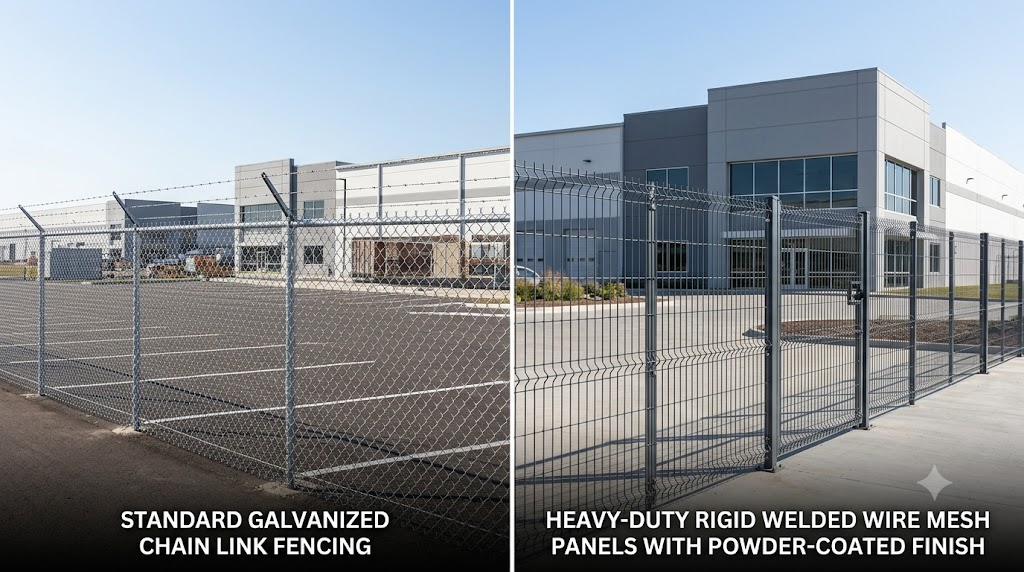
La sélection de la barrière périmétrique appropriée pour les installations commerciales et industrielles nécessite d'équilibrer les dépenses d'investissement initiales et les exigences de sécurité à long terme. Les gestionnaires d'installations évaluent fréquemment deux principales options de barrières métalliques : clôture traditionnelle à mailles de chaîne et panneaux rigides en treillis métallique soudé.
Alors que les clôtures à mailles losangées offrent un coût de matériau inférieur, les panneaux en treillis métallique soudé offrent des propriétés d'intégrité structurelle, de résistance aux coupures et d'anti-montée supérieures.
Réponse directe : quel système de clôture devriez-vous choisir ?
Résumé rapide : Choisir clôture à mailles de chaîne pour les grandes limites de périmètre à faible risque où une démarcation de base est requise à un coût initial minimal. Choisir panneaux de treillis métallique soudés pour les sites industriels à haut risque, les centres logistiques et les actifs commerciaux nécessitant une dissuasion active contre les intrusions, une résistance anti-coupure et de faibles coûts de maintenance à long terme.
Comparaison des spécifications techniques et des performances
Pour s'aligner sur les cadres modernes d'atténuation des risques tels que les directives de sécurité des sites du CEDA, les planificateurs des installations doivent évaluer la résistance mécanique ainsi que la durée de vie des matériaux.
| Caractéristique/Paramètre | Clôture à maillons de chaîne | Treillis métallique soudé rigide | Impact sur les performances |
| Ouverture/taille du maillage | 50 mm × 50 mm (diamant) | 50 mm × 200 mm / 12,7 mm × 76,2 mm | Une ouverture plus petite empêche les prises en main |
| Résistance aux coupures | Faible (tissage à fil unique) | Élevé (intersections soudées) | Les joints soudés restent intacts si un fil est coupé |
| Résistance à l'escalade | Modéré (flexible) | Élevé à extrême (panneau rigide) | Plus difficile à mettre à l’échelle sans équipement spécialisé |
| Rigidité structurelle | Nécessite un fil/rails de tension | Profil autoportant | Les panneaux soudés ne s'affaissent pas avec le temps |
| Durée de vie (galvanisé) | 10 à 15 ans | 20 à 30 ans et plus | Les panneaux soudés nécessitent moins de remplacements |
Intégrité mécanique et défense structurelle
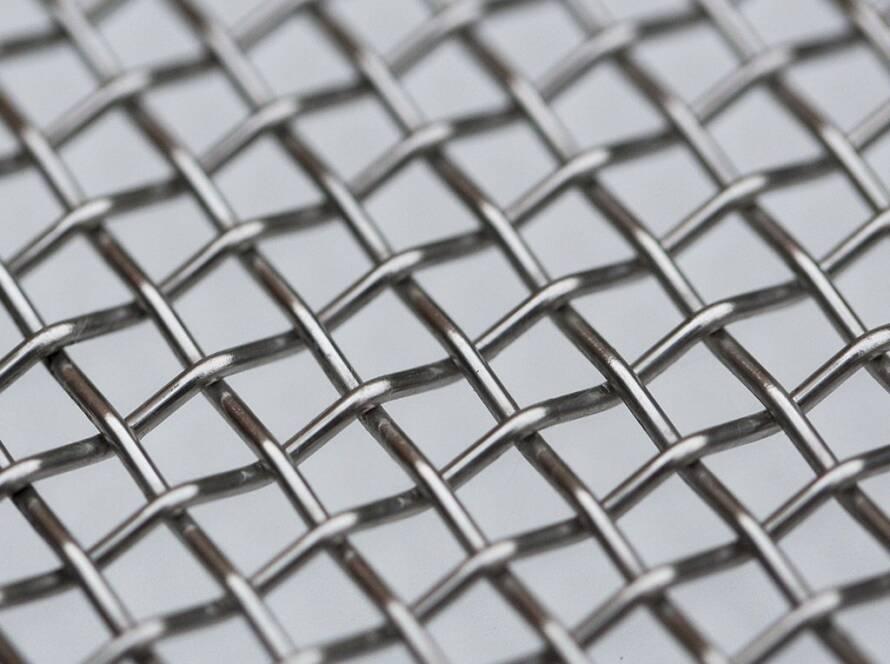
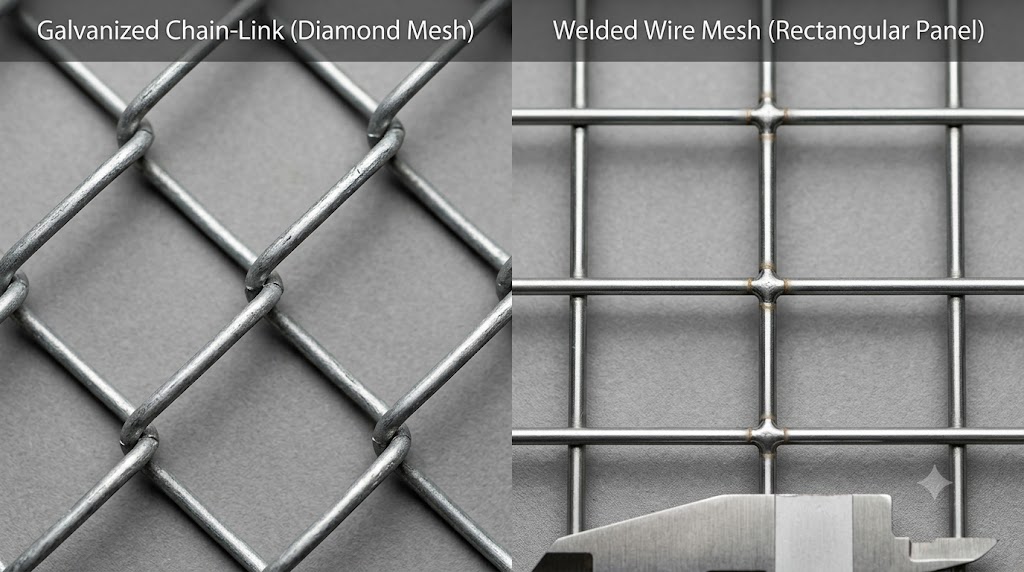
La principale différence structurelle réside dans la construction commune. Le maillon de chaîne est constitué de fils hélicoïdaux entrelacés qui un intrus peut détordre ou couper avec des outils manuels de base. Une fois ils coupent un seul brin, le tissu tout entier se défait sous la pression.
En revanche, les poids lourds panneaux rigides en treillis métallique soudé comportent des intersections soudées par résistance à chaque point de croisement. Si un intrus coupe un fil individuel, le treillis environnant conserve l’intégrité de son cadre structurel. Pour les infrastructures critiques, les installations deviennent denses 358 clôtures de sécurité anti-montée, ce qui élimine les prises de pincement et empêche l'insertion du coupe-boulon conformément aux Spécification standard ASTM F2453 pour les clôtures grillagées.
Répartition du coût total de possession (TCO)
Bien que standard clôture commerciale de maillon de chaîne a un prix d'achat initial de 20 à 30 % inférieur, le treillis métallique soudé offre un coût total de possession inférieur sur un cycle de vie de 15 ans :
- Main d'œuvre d'installation : Les panneaux soudés se montent rapidement sur des poteaux pré-percés à l'aide de pinces de sécurité spécialisées, réduisant ainsi le temps d'installation sur le terrain par rapport au déroulement et à la tension du tissu à maillons de chaîne.
- Coûts d'entretien : Le maillon de chaîne nécessite des retensions et des réparations fréquentes en raison de l'affaissement ou des dommages causés par un impact. Les panneaux en treillis soudé résistent aux impacts localisés sans déformer les sections adjacentes.
- Compatibilité matérielle : Les systèmes soudés rigides s'intègrent parfaitement aux poteaux et raccords de clôture, aux bras en fil de rasoir montés sur le dessus et aux systèmes électroniques de détection d'intrusion périmétrique (PIDS).